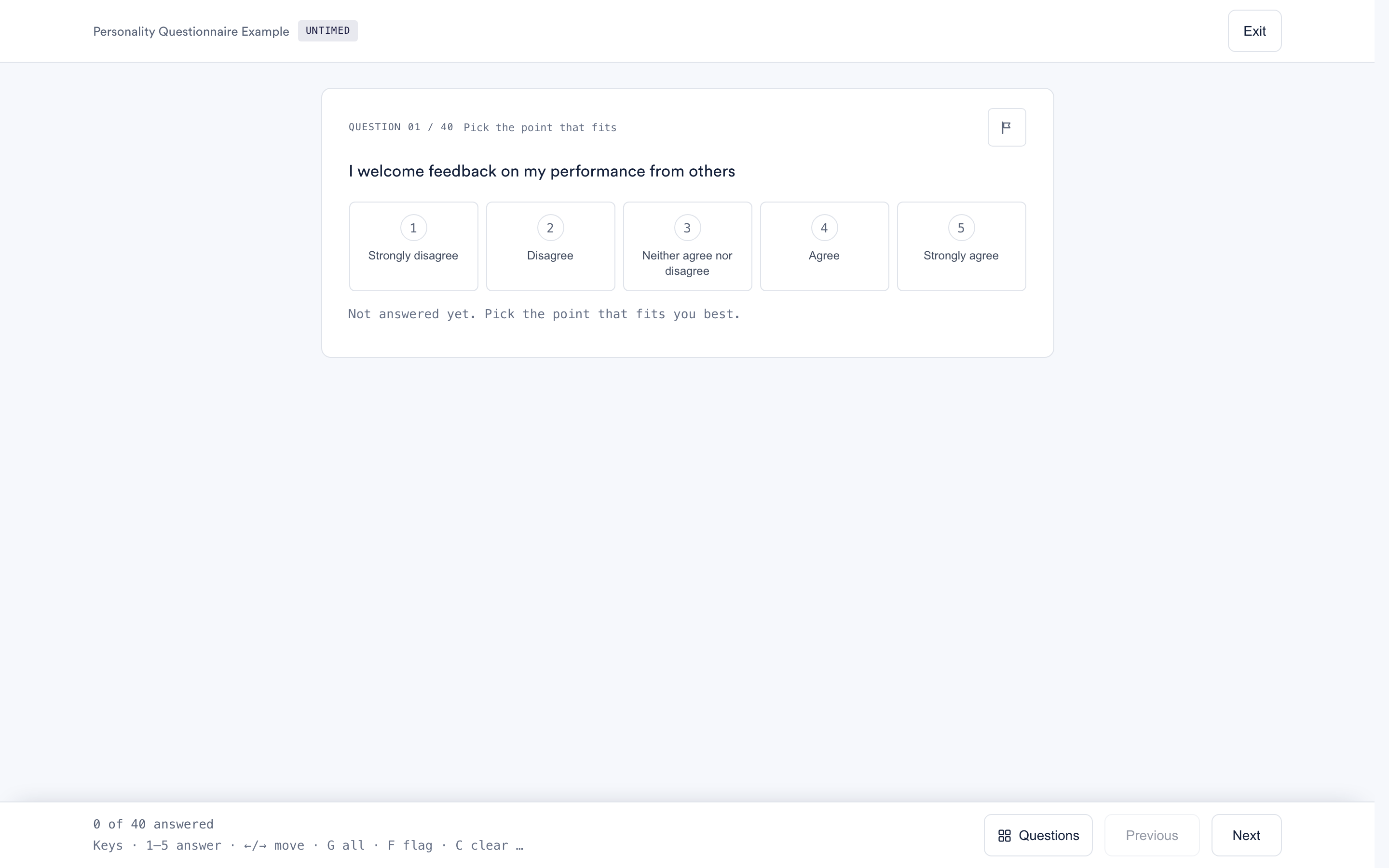
The personality questionnaire is not scored. There is no percentage, it does not enter the overall score, and there is no better or worse.
What a personality result gives you
A profile across work-related traits. Each trait shows:
- a band, describing where the candidate sits,
- a percentile, and
- a short description of what that position tends to look like at work,
- a suggested interview question for exploring it.
What a percentile means here
It places the candidate against the comparison group on that trait. A high percentile on a trait means more of it, not more merit.
The product states it plainly and so should you when you discuss it: higher or lower scores describe differences in personality, rather than better or worse performance.
The interest profile
Where an assessment includes the interest questionnaire, it describes the kinds of work activities and environments a candidate prefers, across six dimensions. It is a statement of preference, not of ability.
How to use a personality result
As interview material, not as a filter. The suggested questions exist because the useful thing about a personality profile is the conversation it gives you. Ask the question, listen to the example, and judge the example.
Against the demands of the role, written down first. If you decide after seeing the profiles which traits the job needs, you are describing the candidates you liked.
As a description, not a prediction. The profile describes how someone tends to report working. It does not forecast performance, and nothing in the product claims it does.
The mistake to avoid
Ranking candidates on a trait and treating the top of the list as the strongest candidate. That is not what the instrument is for, and it will not survive a conversation with a candidate who asks how the decision was made.
Be careful with traits that can correlate with disability, health or neurodivergence. Screening people out on a personality trait can be unlawful discrimination, and it is a poor way to hire regardless. If a trait genuinely matters to the job, be able to say why in one sentence about the work.