Numerical reasoning tests how well you work with figures in the form they arrive at work: tables, charts and short passages, rather than sums on their own.
What a question looks like
You are given some data, often a table or a chart, and asked something that requires you to use it. The options are numbers or statements, and one is correct.
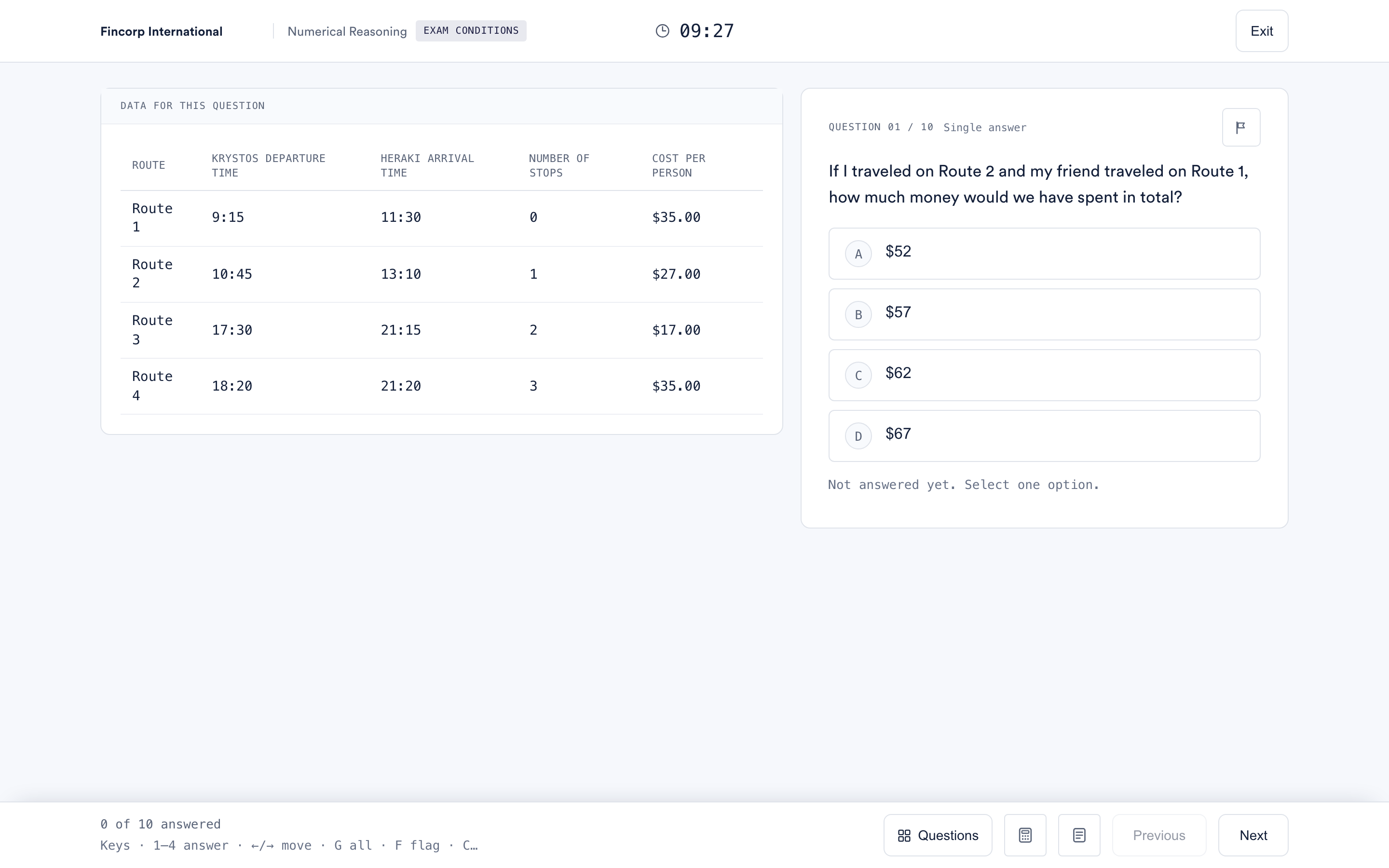
Everything you need is in front of you. You are not being asked to remember formulas or recall facts, and no question depends on knowing an industry.
The maths involved
Percentages, ratios, proportions, rates of change and reading totals off a table. The arithmetic is not the hard part: the work is deciding which figures answer the question.
There is a calculator built in, so you do not need your own. See the calculator and rough paper.
How to approach a numerical test
- Read the question before the table. It tells you which of the numbers matter, and most tables contain more than any one question needs.
- Check the units and the headings. Thousands against millions, and a column you assumed was a total, are where most avoidable mistakes come from.
- Answer everything. An unanswered question scores nothing, so a reasoned guess beats a blank. Flag it and come back if there is time. See flagging a question.
The time limit
These tests are timed, and the time limit is shown on the instructions page before you begin. The clock does not pause, so start when you have a clear run at it. See how your answers are saved.